What product is cheaper in Switzerland?
When Switzerland is mentioned, people often think of a country where the cost of living is high, where prices sometimes defy logic, and where the idea of making substantial savings is quickly abandoned. However, behind this reputation, Switzerland hides some good surprises for savvy consumers. Whether it’s through good habits, the choice of products or places to shop, it is possible to spend less, or even much less, in certain areas. From local food products to precision watches, from public transport to everyday items: some goods display competitive prices, even more advantageous than elsewhere in Europe. This phenomenon reflects both the strength of the national industry and local commercial strategies. Behind these opportunities, iconic brands like Nestlé, Swatch, Ricola, and Lindt energize the market with products that appeal for their quality and value for money. In this exploration, we will discover not only which products are cheaper but also where and how to buy them to maximize your savings in Switzerland by 2025.
Local food products: Switzerland’s economic strength for better buying
In a country where the cost of living is often criticized, Swiss food products manage to stand out. It should be noted that favoring local products often helps reduce the bill compared to imported items that are subjected to taxes, transport costs, and additional margins.
In the realm of fresh products, particularly fruits, vegetables, and dairy products, Switzerland offers its consumers interesting prices when they turn to local markets or small producers. At these markets, proximity is a major asset: no long travels, no multiple intermediaries, thus fairer prices that are often lower than those found in large stores.
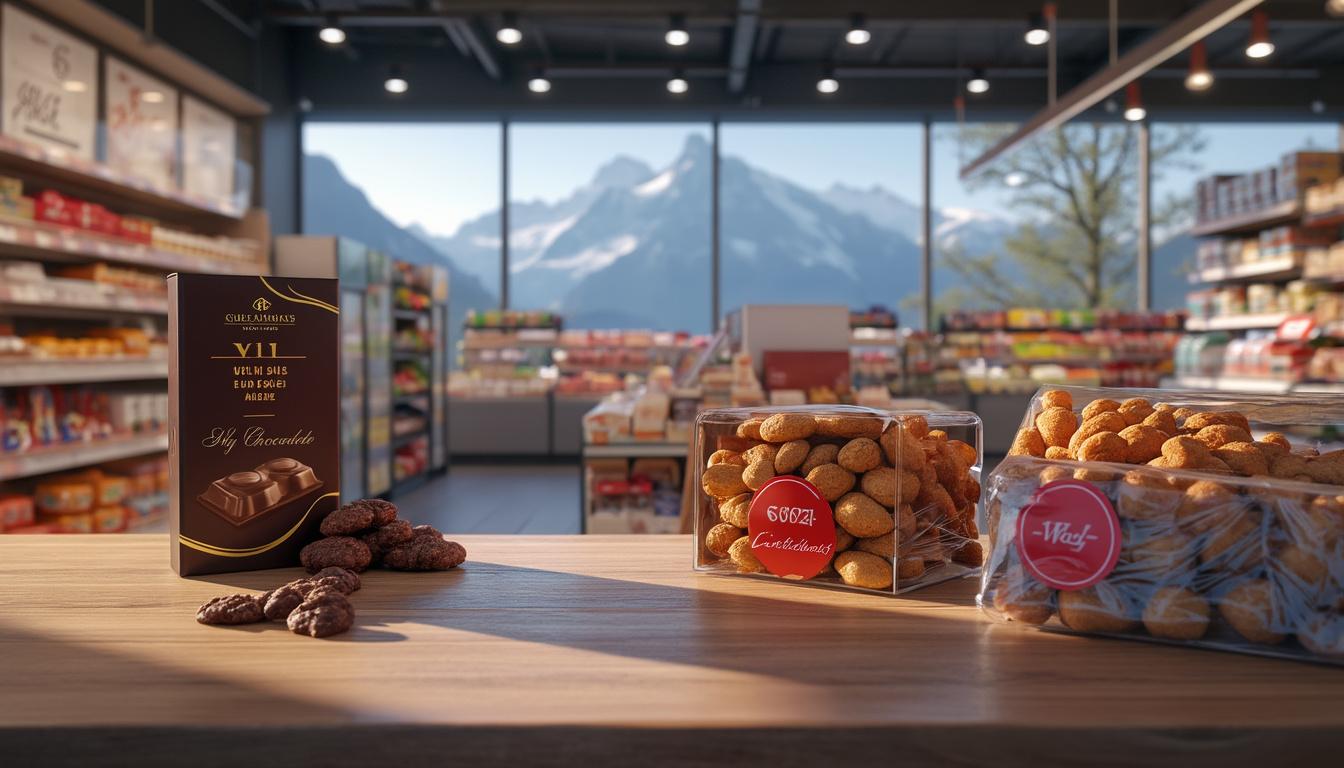
Swiss cheeses such as Emmental, Gruyère, or Appenzeller: These cheeses enjoy not only international fame but also an excellent value for money when purchased directly from the producer or local cheesemongers. Chocolate, a flagship product notably thanks to giants like Lindt or Nestlé, remains a staple. Buying these products in their country of origin minimizes the margins related to exportation, making them sometimes more affordable than abroad. Dairy products from Swiss agriculture, such as milk or yogurts, benefit from rigorous control and maximum quality, often sold at a lower price than their imported counterparts in supermarkets.
In a simple table, we can summarize the average price differences observed in Switzerland between local and imported products:
| Product || Average local price (CHF) || Average imported price (CHF) || Difference (%) | | Cheeses || 15.50/kg || 18.00/kg || -14% | | Fruits and vegetables || 3.20/kg || 4.00/kg || -20% | | Dairy products || 1.80/L || 2.40/L || -25% | | Swiss chocolate (Lindt, Nestlé) || 2.90/100g || 3.40/100g || -15% |
Knowing these differences is useful for directing purchases and avoiding unpleasant surprises at the checkout. For example, when a resident of Geneva chooses to shop at a local market or small retailer rather than at large retail chains like Migros or Coop, there is a good chance they will find fresher products while paying less.
If you wish to delve deeper into these shopping opportunities, there are also valuable tips provided by specialists, particularly at fiducompta.ch, which assists you in gaining a better understanding of the Swiss market: Learn more about Swiss products.
How to take advantage of local markets to make substantial savings
To optimize your budget in Switzerland, targeting farmers’ markets is an excellent strategy, as discovered by Julia, a young entrepreneur in Geneva who usually spent a lot at the supermarket. Since she started going to the Saturday market in Plainpalais, the savings she has made on fresh products have significantly improved her purchasing power. Here are her tips:
- Prioritize shopping at the end of the day when vendors often offer discounted prices to sell off unsold goods.
- Favor seasonal baskets, which group together several local fruits or vegetables at a reduced price.
- Avoid buying imported products at markets by focusing on Swiss produce, which is often more affordable.
This approach also helps support the Swiss local economy by strengthening the short supply chain and reducing the carbon footprint related to transport. It is also advisable to check the schedules and locations of local markets to not miss the best opportunities.
Iconic Swiss brands: advantageous value for money
Switzerland boasts several world-renowned brands whose reputation continues to grow. Buying these products in Switzerland generally allows for better prices than in other countries, notably due to the absence of excessive import/export fees. This advantage is particularly evident with major brands such as:
Swiss Army (famous for its versatile and durable Swiss knives) Swatch, a watchmaking leader offering innovative design watches at competitive prices in Switzerland Lindt, an iconic brand for chocolate, very popular internationally Ricola, famous for its Swiss herbal candies Nestlé, Swiss food giant with a wide range of popular products
Buying directly in Switzerland from official stores or outlet stores allows you to benefit from slightly lower prices, but above all, guaranteed authenticity. Take the example of Swatch: during a trip to Switzerland, it is common to see price differences of up to 15% in favor of local purchases on certain flagship models. This observation is reinforced by regular promotions in official stores, making the shopping experience interesting for both tourists and locals.
For Swiss Army knives, gifting or equipping oneself with the famous Swiss tool is also part of these purchases sensitive to value for money. Victorinox offers an extensive range in Switzerland with offers often unavailable abroad or sold at higher prices.
Nevertheless, one aspect to watch is the consideration of exchange rates for tourists or cross-border workers. In this context, good fiscal and accounting management is essential to optimize expenses. Our firm precisely assists you with these delicate subjects: Discover our expert services in Geneva.
Top tips for savvy shopping with Swiss giants
Here are some practical tips to fully leverage the advantages of Swiss products:
Systematically compare prices between official stores, retail chains like Coop or Migros, and online sites Take advantage of sales or seasonal promotions to acquire luxury items at bargain prices Favor factory outlet stores, often located on the outskirts of cities to benefit from advantageous prices Use sites like Ricardo for auctions and good deals on new or slightly used products
This know-how in shopping can be a valuable asset, especially if you are starting a business in Switzerland and want to optimize your wealth management. For all steps, FIDUCOMPTA Geneva guides you step by step.
Comparing supermarkets in Switzerland: where to find the lowest prices?
When considering major traditional chains like Migros and Coop, alongside discount stores like Aldi and Lidl, competition intensifies and the price gaps are narrowing. According to the latest studies, the best strategy is no longer necessarily to remain loyal to a single supermarket but rather to diversify shopping points depending on promotions and locality.
A comparison between these stores reveals modest differences in prices on branded products:
| Product || Coop (CHF) || Lidl (CHF) || Migros (CHF) || Max. difference (%) | | Barilla Spaghetti No. 5 (1kg) || 3.40 || 3.39 || 3.40 || 0.3% | | Monini Olive Oil (1L) || – || 12.49 || 13.60 || 8.9% | | Heinz Ketchup (500ml) || 2.95 || 2.79 || 2.95 || 5.7% | | Foralp Butter (200g) || 3.30 || 3.25 || 3.30 || 1.5% |
Beyond similar prices, several tips help reduce the bill:
- Use loyalty cards and accumulate points
- Monitor weekly promotions specific to each chain
- Buy store brand products rather than major brands when the price difference is notable
- Opt for bulk purchases, which are sometimes offered at a better rate
This precise comparison mainly concerns everyday consumer products. For more specific purchases, such as personal care or cleaning items, the differences can be slightly more pronounced.
This is why savvy consumers take advantage of online tools like price comparators to stay updated and make the most profitable choice.
Optimizing your leisure and transport budget in Switzerland: surprising tips
Swiss public transport is known for its efficiency and precision, but also for its sometimes high unit prices. However, there are several economical options such as monthly or annual subscriptions that offer unlimited access at fixed rates, perfect for commuters.
For leisure, Switzerland is a natural paradise with countless hiking trails, parks, and lakes, most accessible for free or at low cost. Some cities also offer tourist cards that include discounts on museums and transport, thus helping to control expenses.
Half-fare subscriptions: allow you to benefit from a 50% discount on most Swiss public transportation. Swiss Travel Pass: ideal for tourists, this pass offers unlimited access to the rail network, buses, and some tourist attractions. Local cards with cultural and leisure discounts, to explore based on your place of residence. Free outdoor activities: hiking, cycling, swimming in lakes, or visiting natural parks.
Adopting these economical solutions for getting around and enjoying leisure activities is essential to avoid exceeding your budget, especially in an expensive city like Geneva or Zurich. Financial planning often remains the key. For this, our team offers expert support in internal control and wealth management: Discover our customized solutions.
How tax planning optimizes your purchases in Switzerland
Tax management in Switzerland directly influences the price-quality ratio of products and services. Between health insurance, taxes, and other mandatory expenses, adopting a clear strategy is essential to avoid straining your budget.
For example, choosing a health insurance policy suited to your profile can significantly modulate monthly costs. For businesses, well-planned taxation and accounting allow for optimizing margins, thereby affecting service prices.
- Compare health offers and adjust your contract to avoid paying for unnecessary coverage
- Use expert services to manage your taxation and avoid costly mistakes
- Deduct certain professional expenses to reduce the taxable base
- Account for double taxation and know how to manage cross-border income
By collaborating with tax and accounting experts in Geneva, like FIDUCOMPTA, you benefit from a solid framework to optimize your personal and professional finances.
Concrete example of tax optimization for a cross-border entrepreneur
Marc is an entrepreneur living in Annemasse but working in Geneva. His business is subjected to unpredictable fluctuations in costs due to poor tax management. Thanks to a personalized intervention, he was able to review his accounting system, optimize his deductions, and significantly reduce his charges. This cash gain also allowed him to invest more in local products for his activity. This example shows how accounting and tax expertise can make a difference for purchases in Switzerland.
Tips for online shopping at low prices in Switzerland
Swiss e-commerce is experiencing significant growth, particularly with platforms like Digitec, Galaxus, or Ricardo. These portals often offer a competitive shopping experience, with a wealth of products as well as interesting promotions. It is advisable to take advantage of these tools to limit your budget:
- Systematically compare prices between sites to find the best deal
- Take advantage of flash sales and seasonal promotions
- Read customer reviews to avoid bad experiences
- Use click & collect to save on delivery fees
Brands like Swiss Army, Gillette, or L’Occitane are frequently found on these platforms, thus providing easy access to their products at competitive prices.
Online shopping, however, requires vigilance, particularly regarding warranties, returns, or after-sales service, areas where the expertise of a fiduciary firm like FIDUCOMPTA Geneva can guide you.
Living better in Switzerland without spending more: practical advice and realities
It is true that Switzerland has a reputation for being one of the most expensive countries in the world. However, optimizations exist in many aspects of daily life.
Here are some recommendations for newcomers as well as long-term residents:
Shop around: compare offers from different supermarkets (Migros, Coop, Aldi, Lidl) – sometimes a product is cheaper in one than in another Practice annual planning to anticipate your purchases while making the most of sales Prefer Swiss products which are often cheaper and of better quality Optimize your travels by using subscriptions and public transport Take advantage of aid or tax exemptions with expert advice tailored to your situation
These techniques lead to better control of spending while enjoying Swiss qualities. You thus embrace the paradox: living in an expensive country also means benefiting from an environment and quality that justify financial efforts in certain respects.
FAQ: Your questions about cheaper products in Switzerland
**What food products are the cheapest in Switzerland?
- Local products such as fruits, vegetables, cheeses, and Swiss dairy products are generally cheaper than their imported counterparts. **Where can I find the best deals in Swiss supermarkets?
- Chains like Aldi, Lidl, Migros, and Coop offer competitive prices, but alternating between them and taking advantage of promotions remains the most effective strategy. **Can I buy Swiss brand products cheaper in Switzerland?
- Yes, brands like Swatch, Swiss Army, Lindt, or Ricola are often more affordable in their domestic market due to the absence of import fees. **How can I optimize my transport budget in Switzerland?
- Using half-fare or annual subscriptions, the Swiss Travel Card, or preferring public transport over driving can lead to substantial savings. Is online shopping advantageous in Switzerland?
- Yes, with sites such as Digitec, Galaxus, or Ricardo, it is possible to find promotions, but be careful to compare prices and consider any potential fees.